Exhibitions

The Illinois State Museum's extensive collections can be seen in both permanent and rotating exhibitions. Permanent exhibitions are always available, while rotating exhibitions change every few months.

New & Noteworthy!

Photograph of exhibit case including albums, pictures, and hall monitor jacket.

Second Floor Corridor

New to the second floor corridor: a hall monitor jacket and two CD albums from Sylvia Fedrick of Chicago, representing Sylvia’s journey from the “Most Talented” member of her senior class at Lindblom Technical High School to a Black Essence Award-winning recording artist.

The Illinois State Museum’s collections are always in development as new things are added and as we learn more about what we have. New and noteworthy objects are often featured in the lobby and/or on the second floor corridor. Keep checking back at the ISM to see what’s new!

Our Storytellers: Pokagon Potawatomi Black Ash Baskets

Six black ash baskets sitting horizontally on a green display shelf. An exhibit label is on the back wall.

Open through May 25, 2026

Our Storytellers: Pokagon Potawatomi Black Ash Baskets
Second Floor Corridor Gallery

Our Storytellers: Pokagon Potawatomi Black Ash Baskets explores the artistry, tradition and the importance of basketmaking among the Pokagon band of the Potawatomi people. For the Pokagon Potawatomi, these baskets are regarded with the utmost honor, treated as living members of the community. However, over the past century, the practice of basket weaving has been threatened; first by the enforcement of oppressive government regulations and now by the ecological threat presented by the Emerald Ash Borer. This exhibit tells a story of survival and resilience of the Pokagon Potawatomi. Our Storytellers was organized by the baskets’ caretaker Dr. John Low, Pokagon Band of Potawatomi and the Field Museum of Natural History.

Sharon Hoogstraten: Dancing for our Tribe

Open through April 26, 2026

Sharon Hoogstraten: Dancing for our Tribe
Second Floor Gallery

Photographer Sharon Hoogstraten celebrates the Potawatomi people dressed in their dance regalia through 30 portaits. Begun in 2010 at the Family Reunion Festival in Shawnee, Oklahoma, this project honors the descendants of the Great Lakes’ early inhabitants—proud, modern people preserving culture with intention.  Dancing for Our Tribe reflects how regalia is a living tradition, not a costume or relic. It is an expression of identity, blending ancestral artistry with contemporary life—from sewing machines and synthetic fabrics to tattoos and military service.


Minohsayaki: Painted Robes

Open through April 26, 2026

Minohsayaki ‘Painted Robes’
Second Floor Gallery

Minohsayaki ‘Painted Robes’ presents the story of collaborative efforts by the Peewaaliaki (Peoria Tribe) and Myaamiaki (Miami Tribe), along with non-Native scholars, to reconnect with their historic practice of hide painting. This exhibition was supported by a grant from the Andrew W. Mellon Foundation through the Humanities Without Walls Consortium, which is administered by the University of Illinois. It was first exhibited at the Richard and Carole Cocks Art Museum (RCCAM) at Miami University in Spring 2024 and is augmented with artifacts from the ISM’s Anthropology Collection that originate from historic Peoria villages. The exhibition is part of the Reclaiming Stories project.

Indigenous Beadwork of the Great Lakes

Open through April 26, 2026

Indigenous Beadwork of the Great Lakes
Second Floor Gallery

Indigenous Beadwork of the Great Lakes features stunning examples of beadwork created by Ojibwe, Potawatomi, and Haudenosaunee (Iroquois) artists from the turn of the 20th century. The exhibition explores beadwork as a form of resiliency and a method for expressing and maintaining one’s identity. Due to their delicate nature, this is the first time in many years these beaded textiles are on display

Mi Casa es Tu Casa

Open through May 10

Second Floor Gallery

Mi Casa es Tu Casa is a student-curated exhibition at the Illinois State Museum that tells the stories of immigrant and first-generation Latine families living in rural Illinois. The exhibit was created with the Beardstown High School Spanish Club and highlights personal stories, photos, and meaningful objects that the students collected.

At the students’ request, the exhibition is presented in Spanish first to reflect their voices, perspectives, and experiences. Through oral histories and community storytelling, Mi Casa es Tu Casa explores themes like resilience, identity, belonging, and adaptation. The exhibit encourages visitors to see rural Illinois from the perspective of its newest generations and to build greater empathy and understanding in their communities.

America's Elephant

logo for the exhibit America's Elephant with a dark blue outline of a mastodon on a white background

Opened February 17, 2026

First Floor Hot Science Gallery

America's Elephant presents the curious history of our country's first fossil: the American mastodon. This new exhibit explores when the first mastodon fossils were found, how the remains of an unknown animal came to be understood as our country grew, and how the Illinois State Museum has been a leader in the science of mastodons.

This exhibit encourages visitors to think about fossils in new ways. Fans of the natural sciences and of United States history are both sure to find something surprising in our newest Hot Science exhibit.

i feel: exploring emotion through art

logo for the exhibit I feel blank

Open through Spring 2026

Art is personal. Art is inspiring. Art can bring to the surface a variety of different feelings. But sometimes, we feel like art isn’t “for us” if we aren’t experts. However, everyone can look at, critique, and connect with art, even if it is just how the art makes us feel. I Feel ____. an interactive exhibit curated specifically for children and youth to engage with, returns to ISM with brand new art. This installation encourages young visitors to share their opinions on how the artwork makes them feel. Guests can spend time taking in each piece before voting on what feeling the art evokes. While the exhibit is built as an entry point for children into the art world, the installation is open to visitors of all ages.


Changes: Dynamic Illinois Environments
First Floor

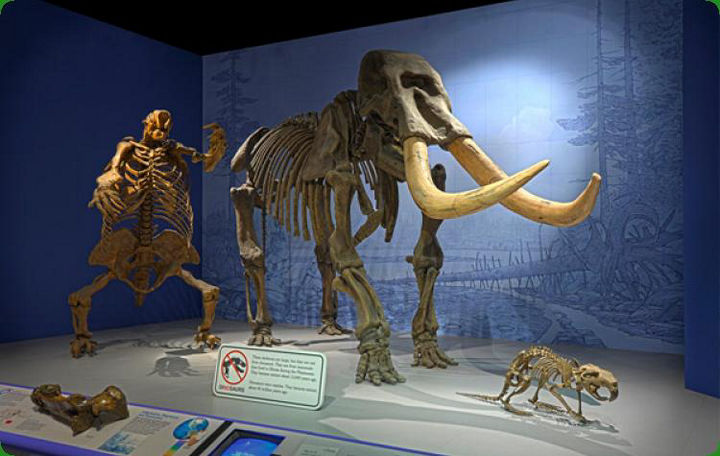
The Changes exhibit allows visitors to travel into the past to see how Illinois has changed and how it continues to change today. 

At Home in the Heartland
Second Floor

Listen to the stories of real people who lived in Illinois. Immerse yourself in the dramatic changes in household life over the past 300 years.

Footer